
Retiring at 50 is not unrealistic. It simply requires: Discipline + Long-Term Vision + Compounding

Infosys reported a 20.8 per cent increase in consolidated net profit to 8,501 crore for the January-March quarter of FY26, with revenue from operations rising 13.4 per cent to 46,402 crore. The IT major has guided for a 1.5 to 3.5 per cent revenue growth for FY27, driven by momentum in financial services, utilities, and emerging AI services, despite a volatile macroeconomic environment and geopolitical risks.

Despite recent share price dips, Bharti Airtel is strategically positioned for growth, driven by investments in data centres via Nxtra, a potential tariff hike, and strong performance in Africa, alongside efforts to deleverage and expand its subscriber base in underpenetrated rural markets.

Godrej Properties Limited (GPL) reported its highest-ever quarterly profit of 649.5 crore in Q4 FY26, a 70.13 per cent year-on-year increase, driven by record revenues and bookings. The company aims for over 39,000 crore in residential bookings for FY27 and plans to raise up to 3,000 crore through debt securities.

At the upper end of that range, the bourse would rank among the seven most valuable listed firms in the country.

This single amendment, unfortunately, overshadows much of the Budget's promise, explains Harsh Roongta.

Indian corporate are increasingly shifting away from bank funding towards alternative sources, such as equity and bond markets, as their deleveraged balance sheets have improved their ability to raise equity at better valuations. Moreover, the 100 basis points (bps) rate cut by the Reserve Bank of India (RBI) has enabled them to access long-term funds from the debt capital market at cheaper rates.

'Multi-asset funds have cornered 30 per cent of hybrid fund inflows in 2025, reflecting a growing preference for diversified portfolios that combine equity, debt and commodities.'

Only 2.5 per cent of the equity in Jio Platforms will be offloaded through the OFS route -- meant for secondary share sale.

Indian stock market indices Sensex and Nifty experienced a significant drop in early trade, reversing a three-day rally. The decline was triggered by a sharp increase in crude oil prices, weak global market trends, and continuous outflows of foreign funds.
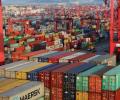
India's first maritime lender, state-owned Sagarmala Finance Corporation Ltd (SMFCL) hit the ground running with a Rs 4,300 crore disbursement announcement last Tuesday, within months of being registered as a non-banking financial company (NBFC) in June 2025.

The rupee declined 31 paise to settle at 90.65 against the US dollar on Friday, weighed down by geopolitical uncertainties over the US-Iran talks, and a sharp rise in global crude oil prices.

Market sentiment is likely to remain cautious as investors position themselves for the upcoming Union Budget and the US Fed's interest rate decision, where expectations are muted.

Retail investors are moving away from a buy-and-hold approach and towards more informed short-term positioning, recent investment patterns show.

Equity benchmarks face a key test as investors weigh consumption revival hopes against tariff pressures and weak earnings. Amidst this, HSBC has outlined tailwinds and risks that could cap gains.
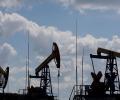
Live updates on the US-Israel-Iran war: Trump escalates threats, Iran retaliates, and oil prices surge as the Strait of Hormuz crisis disrupts global markets.

Indian benchmark stock indices Sensex and Nifty rallied for the second consecutive day, closing nearly 1 per cent higher, driven by gains in metal and auto sectors and positive global market trends.

Indian equity markets experienced a significant downturn as geopolitical tensions in West Asia, rising oil prices, and foreign fund outflows dampened investor confidence. The Sensex and Nifty both fell sharply in early trade, reflecting broader global market weakness.

India's high cost of capital due to relatively shallow corporate bond markets, limited institutional investor depth, sovereign risk premia, and regulatory restrictions on capital flows, is a constraint on private investment and long-run growth, the Economic Survey, authored by Chief Economic Advisor (CEA) V Anantha Nageswaran, said.

Among Sensex firms, Infosys, Bharti Airtel, Adani Ports, Sun Pharma, Tech Mahindra, Eternal, Axis Bank and Maruti were the major laggards. However, ITC, UltraTech Cement, Tata Steel and HDFC Bank were among the gainers.

Among Sensex firms, Sun Pharma, Tata Steel, Power Grid, Asian Paints, NTPC and Bharti Airtel were the biggest laggards. Tata Consultancy Services, Tech Mahindra, Infosys, Adani Ports, Axis Bank and HCL Tech were among the gainers.

The aggregate net worth of the country's 176 dollar billionaires dropped to $984.2 billion during 2025, down from a record $1,036.2 billion at the end of December 2024.

Bharat PET Ltd, an integrated packaging solutions provider, has filed draft papers with SEBI to raise Rs 760 crore through an IPO, including a fresh issue and an offer for sale by promoters.

Mixed-use real estate projects, integrating residential, commercial, retail, and hospitality segments, are gaining significant traction in India as developers seek to maximise returns, optimise land use, and diversify cash flows, with experts predicting 35-40% of urban real estate supply will be mixed-use by 2030.

Asset financing firms are still witnessing subdued demand and meaningful recovery is likely only in FY16, the report said.

Finance Minister Nirmala Sitharaman on Sunday announced an increase in the Securities Transaction Tax (STT) on Futures and Options trade with a view to discouraging small investors from speculative trading in derivatives, which led to a sharp decline in the stock market.
.jpg)
Government divestment reached record figures after the financial crisis, at the same time as promoters were required to bring down their stake in companies to 75 per cent or less.

From the 30-Sensex firms, Trent, Larsen & Toubro, Reliance Industries, InterGlobe Aviation, Maruti, ITC, Adani Ports and Bharat Electronics were among the biggest laggards. In contrast, Eternal, ICICI Bank, Tech Mahindra, State Bank of India and Tata Consultancy Services were among the gainers.

The QIP route was a big hit.

Equity markets this week would keenly track the upcoming GST Council meeting, macroeconomic data announcements and trading activity of foreign investors for further movement, analysts said. Moreover, developments related to tariff negotiations, global market trends and auto sales data would also drive investors' sentiment.

Foreign portfolio investors (FPIs) remained net sellers of Indian equities in September, withdrawing Rs 23,885 crore (around $2.7 billion) and taking year-to-date outflow to Rs 1.58 lakh crore ($17.6 billion).

Foreign investors continue to show confidence in the country's equity market, infusing Rs 14,167 crore so far this month, largely driven by favourable global cues and robust domestic fundamentals. Notably, this inflow has come despite the ongoing military tensions between India and Pakistan.

This marks the strongest DRHP filing tally since 1996, when 428 firms sought to enter India's equity markets.

Mahindra & Mahindra (M&M) is largely bullish among analysts following its Q4FY26 results, driven by strong SUV demand, a robust product pipeline, and improving growth visibility across segments, despite near-term margin pressures from rising commodity costs and potential weakness in the tractor cycle.

'...a mix of asset classes.' 'Include equities for growth (across market caps), debt for stability and liquidity, gold as a hedge against macro and currency risk, and global assets for geographical and economic diversification.'

The Indian government has refuted claims of an impending Rs 25-28 per litre hike in petrol and diesel prices post-assembly elections, stating no such proposal is under consideration by the Ministry of Petroleum and Natural Gas.

Largecap equity funds remain suitable for conservative and moderate risk-taking investors seeking relatively stable returns.

Stock markets are likely to trade in a range-bound manner in a holiday-shortened week where trading activity of foreign investors, currency movement and global macroeconomic data announcements are expected to drive sentiments, analysts said. Several global markets may see subdued activity on account of Christmas and New Year holidays, an expert said.

The strong domestic flow offset selling by foreign portfolio investors who pulled out $23.3 billion (Rs 2.03 trillion) from domestic equity markets in CY25.

There is record underperformance and under-ownership. Some of this is cyclical and will turn on its own. However, we also need to regain our growth credentials. For this, both the government and companies have a role to play, as do investors, points out Akash Prakash.
